How to Use AI in E-Commerce Step by Step Guide
Published: 6 Nov 2025
The world of online shopping is changing fast, and one big reason behind it is Artificial Intelligence (AI). From helping customers find what they love to predicting what products will sell next, AI is reshaping how online stores work. Knowing how to use AI in E-Commerce can help businesses grow faster, work smarter, and create a smoother shopping experience for their customers.
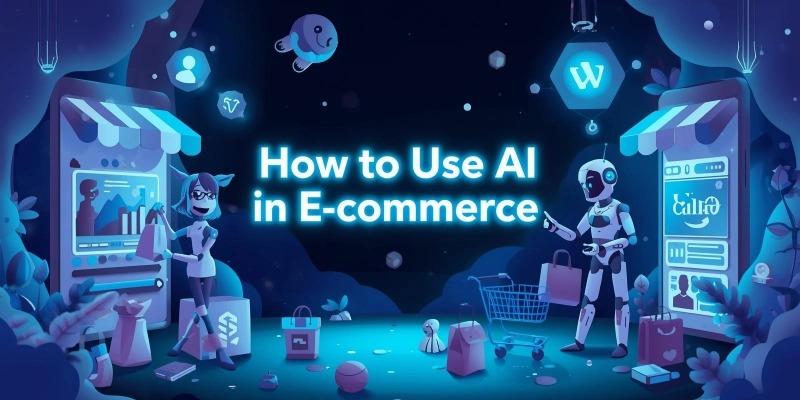
In this article, we’ll explore the top ways to use AI in e-commerce, its benefits, challenges, and real examples that show how it’s transforming online business.
How to Use AI in E-Commerce
Artificial Intelligence is more than a buzzword. It’s a real tool that helps e-commerce stores improve sales, service, and operations. By using AI tools for e-commerce, businesses can personalize shopping, save time, and make better data-driven decisions.
Here are 10 powerful ways to use AI in e-commerce:
- Personalized Product Recommendations
- AI Chatbots and Virtual Assistants
- Visual and Voice Search
- Dynamic Pricing
- AI for Inventory Management
- Predictive Analytics
- Fraud Detection
- AI in Marketing Automation
- Smart Customer Segmentation
- AI-Powered Content Creation
All these uses work together to make online shopping faster, smarter, and more customer-friendly. Let’s explore how each one helps in detail.
1. Personalized Product Recommendations
AI makes online shopping personal. It studies what customers browse, buy, or even leave in their carts to recommend the right products.
- Tracks user behavior across the website
- Suggests items based on browsing and purchase history
- Boosts sales with “related products” or “frequently bought together”
- Builds loyalty by showing relevant items
- Reduces bounce rates by keeping shoppers engaged
Example: Amazon uses AI-driven algorithms to recommend products to users based on their past purchases and searches.
This personalized approach connects naturally to the next area, how AI chatbots make communication smoother for shoppers.
2. AI Chatbots and Virtual Assistants
AI chatbots have become the new online sales assistants. They answer customer queries 24/7 and improve the shopping journey without needing human staff all the time.
- Offer quick responses to FAQs
- Guide customers through checkout
- Provide updates on orders or returns
- Recommend products during chats
- Collect feedback for better service
Example: Shopify stores use AI-powered chatbots like Tidio or ManyChat to help customers find products and resolve issues instantly.
Once communication improves, AI also helps shoppers discover items in smarter ways, through visual and voice search.
3. Visual and Voice Search
AI allows shoppers to search for products using images or voice commands. It makes finding items faster and more natural.
- Matches uploaded images with similar products
- Uses natural language processing for voice commands
- Improves accessibility for users with different needs
- Reduces time spent typing and searching
- Enhances mobile shopping experience
Example: Pinterest’s visual search lets users find similar items by simply uploading a photo, while Alexa enables voice-based shopping.
When customers can find what they want easily, the next step is setting the right price—AI helps with dynamic pricing.
4. Dynamic Pricing
Dynamic pricing is a smart strategy powered by AI that adjusts prices in real time based on market trends and demand.
- Analyzes competitor pricing automatically
- Updates prices based on supply and demand
- Maximizes profits during high-demand seasons
- Offers discounts during slow periods
- Keeps pricing competitive without manual updates
Example: eBay and Amazon use AI tools that change product prices multiple times a day depending on demand and competitor rates.
After managing pricing, AI also helps keep shelves stocked properly through AI inventory management.
5. AI for Inventory Management
AI helps online stores maintain the right stock levels—avoiding both shortages and overstock.
- Predicts demand using historical data
- Alerts sellers before stock runs out
- Identifies slow-moving products
- Suggests restocking times automatically
- Reduces storage costs
Example: Walmart uses AI-driven demand forecasting to restock popular items efficiently, saving time and reducing waste.
Next, AI doesn’t just manage products, it also predicts future sales through predictive analytics.
6. Predictive Analytics
Predictive analytics uses AI to forecast customer behavior and business outcomes.
- Predicts future buying trends
- Helps plan promotions and campaigns
- Identifies potential high-value customers
- Prevents possible churn
- Improves overall business planning
Example: Netflix uses predictive analytics to suggest what users might want to watch next. In e-commerce, this same approach helps predict which products customers may buy next.
However, keeping transactions safe is just as important, that’s where AI fraud detection comes in.
7. Fraud Detection
AI plays a big role in detecting and preventing fraud in e-commerce. It studies user patterns to catch suspicious activities before damage happens.
- Monitors transactions for unusual behavior
- Detects fake accounts or bot activities
- Flags risky payments instantly
- Protects user data with machine learning
- Reduces chargebacks and losses
Example: PayPal uses AI fraud detection systems that analyze thousands of transactions every second to spot and stop fraud.
Now that safety is ensured, businesses can use AI to reach the right people through marketing automation.
8. AI in Marketing Automation
AI simplifies and improves online marketing by sending the right message to the right audience at the right time.
- Automates email campaigns
- Personalizes ads based on interests
- Optimizes ad spend using data insights
- Improves conversion rates
- Tracks campaign performance automatically
Example: E-commerce brands using AI marketing tools like Mailchimp and HubSpot send personalized product emails to users based on browsing behavior.
Once marketing is smarter, AI can also help businesses group their customers better with smart segmentation.
9. Smart Customer Segmentation
AI divides customers into specific groups based on behavior, spending, and interests.
- Groups customers using data analysis
- Helps create targeted marketing messages
- Improves product recommendations for each segment
- Identifies loyal and at-risk customers
- Increases engagement through personalization
Example: Sephora uses AI-driven segmentation to send customized messages and offers based on customer preferences.
After grouping customers, AI can even help generate content that fits their interests—through AI-powered content creation.
10. AI-Powered Content Creation
AI helps businesses produce content like product descriptions, blog posts, and social media captions faster and with better accuracy.
- Generates SEO-friendly content
- Writes engaging product titles and descriptions
- Suggests keywords and topics
- Saves time for marketing teams
- Maintains consistency across all platforms
Example: Tools like Jasper AI and Copy.ai help e-commerce stores create content that attracts buyers and improves search ranking.
Now that we’ve explored all uses, let’s look at how they benefit online stores overall.
Benefits of Using AI in E-Commerce
Before you invest in AI tools, it’s important to understand how they actually help your online store grow. Let’s look at the key benefits of using AI in e-commerce.
- Better Customer Experience: AI personalizes every step of the buyer journey.
- Higher Sales and Conversions: Targeted recommendations and dynamic pricing improve revenue.
- Cost Efficiency: Automating tasks reduces the need for manual work.
- Data-Driven Decisions: Businesses can make smarter choices using analytics.
- Time Savings: AI speeds up customer support, inventory, and marketing tasks.
AI makes e-commerce smarter and smoother, but it also has some challenges to manage.
Limitations and Their Solutions
The table below shows the main limitations of AI in e-commerce along with simple solutions to overcome them.
| Limitations | Solutions |
| High setup costs for small businesses | Start with affordable AI tools for beginners and scale slowly |
| Data privacy and security concerns | Use strong AI data protection systems and encryption |
| Lack of quality data | Gather and clean customer data regularly |
| Over-dependence on automation | Keep human oversight in sensitive areas |
| Technical skill requirements | Train staff or use ready-made AI e-commerce solutions |
With these solutions, even small stores can use AI effectively without huge budgets.
Real-Life Examples of AI in E-Commerce
There are many AI in eCommerce examples that show how companies use smart technology to sell more and serve better.
Here are some popular examples of AI in eCommerce used by global brands.
- Amazon: Uses AI for product recommendations, voice search, and inventory control.
- Shopify: Offers built-in AI tools like Kit for marketing automation.
- Alibaba: Uses visual search and dynamic pricing to improve customer experience.
- H&M: Uses AI to analyze store sales and predict future trends.
- eBay: Applies machine learning to personalize search results and improve fraud detection.
These brands show how powerful AI applications in e-commerce can be when used strategically.
Conclusion
Artificial Intelligence is no longer optional. It’s essential for success in online business. From product recommendations to fraud prevention, AI helps e-commerce brands grow smarter and faster.Knowing how to use AI in E-Commerce gives you an edge in today’s competitive market. Start small, track results, and let AI tools help you create a better experience for your customers every day.
Whether you run an online store or a local brand, learning how to use AI in your business can make your work smoother and more efficient.
Want to explore this topic more deeply? Read our next article on AI in E-Commerce to see more real examples of how AI makes tasks simple and smart.
Frequently Asked Questions (FAQs)
If you’re interested in exploring more ways to use AI for your online store, check out our complete guide on how to use AI for E-Commerce for step-by-step examples and tools.
You can use AI for Shopify by adding smart apps that help with marketing, chatbots, and product recommendations. These tools automate daily tasks and make managing your store easier. Learning how to use AI for Shopify helps improve both sales and customer experience.
AI improves email marketing by analyzing customer behavior and sending personalized messages. It chooses the right time to send emails and increases open rates. Using AI for email marketing helps build stronger connections with your audience.
AI helps dropshipping stores find trending products, set smart prices, and manage stock automatically. It can also detect fake suppliers or risky transactions. Knowing how to use AI for dropshipping makes business operations more efficient.
Start by using AI tools for customer service, marketing, or data analysis. These tools save time and improve decision-making. Learning how to use AI in your business helps you grow with fewer resources.
You can see AI in e-commerce through product recommendations, chatbots, and predictive analytics. Brands like Amazon, Shopify, and eBay already use these tools daily. These examples of AI in eCommerce show how smart technology improves shopping.
AI tools on Shopify can automate marketing, pricing, and customer support. You can install apps that track trends and suggest improvements. Knowing how to use AI on Shopify makes your store run smoothly with less manual work.
You can add chatbots, recommendation widgets, or visual search features to your website. These AI tools help users find products faster and improve overall experience. Understanding how to use AI on your website is the first step toward smarter online business.




- Be Respectful
- Stay Relevant
- Stay Positive
- True Feedback
- Encourage Discussion
- Avoid Spamming
- No Fake News
- Don't Copy-Paste
- No Personal Attacks
- Be Respectful
- Stay Relevant
- Stay Positive
- True Feedback
- Encourage Discussion
- Avoid Spamming
- No Fake News
- Don't Copy-Paste
- No Personal Attacks
