Revolutionize Online Stores with AI in E-Commerce
Published: 14 Aug 2025
Struggling with low sales, abandoned carts, or too many support queries in your online store? You’re not alone. Many e-commerce businesses face these problems every day but the Role of AI in E-commerce is changing that. From smart product suggestions to automated help and faster order processing, AI is helping online stores run smoother and sell better. Whether you’re a small startup or a growing brand, AI tools can solve real problems and save you time.
👉 In this blog, we’ll explore how AI can fix common e-commerce issues and make your store smarter, faster, and more customer-friendly.
E-Commerce Before AI: Slow and Manual Journey
Before AI entered the scene, e-commerce was mostly manual, slow, and less personalized. Business owners had to rely on guesswork, basic tools, and one-size-fits-all strategies to reach customers and grow sales. It worked but it wasn’t smart.
Here’s what running an online store looked like before AI:
- Manual Product Recommendations: Store owners had to decide what to show customers, often with no real data or user behavior insights.
- Basic Customer Support: Support was handled by small teams or even single agents, leading to slow replies and long wait times.
- One-Size Marketing: Everyone got the same emails and ads, whether they were new visitors or loyal buyers.
- Limited Data Use: While data was available, most businesses didn’t have the tools or skills to use it effectively.
- Time-Consuming Processes: Inventory checks, order updates, and reports were often done manually, costing time and increasing mistakes.
AI in E-Commerce
Today, AI has become the brain behind many successful online stores. It helps businesses understand customers, automate tasks, and create better shopping experiences. The role of AI in e-commerce is no longer optional, it’s essential for staying competitive.
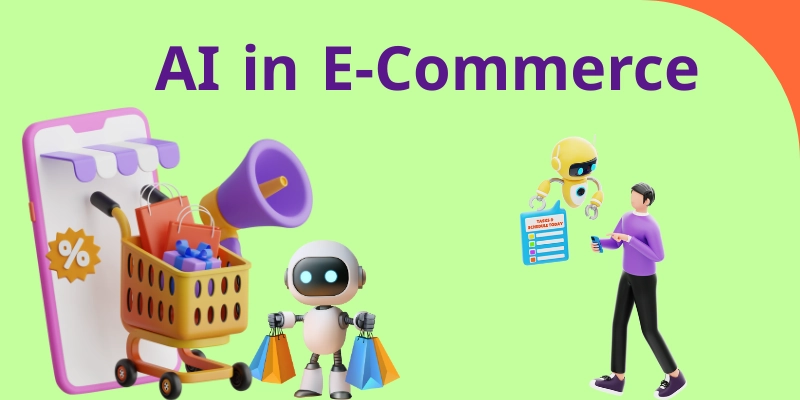
Here’s how AI is transforming e-commerce right now:
- Personalized Shopping Experiences
AI analyzes customer behavior—like past purchases, browsing habits, and clicks to show personalized product recommendations. This boosts user engagement and can increase conversion rates by up to 30%, according to McKinsey. - Smarter Search and Filters
AI-powered search engines use natural language and image recognition to help customers find exactly what they want, even if they type vague keywords or upload a photo. This leads to faster, easier shopping experiences. - AI Chatbots and Virtual Assistants
Modern chatbots handle FAQs, track orders, and even guide users through buying all in real time. According to Salesforce, 69% of consumers prefer AI-powered chat for instant responses over waiting for human support. - Dynamic Pricing and Inventory Management
AI tools adjust prices based on demand, stock levels, and market trends. This helps businesses stay competitive without manual monitoring, while also avoiding overstock or sellouts. - Fraud Detection and Secure Payments
AI systems detect unusual payment behavior or fake accounts, reducing online fraud. A 2024 report from Statista shows that AI has helped reduce fraud losses in e-commerce by over 20% globally.
➡️ With AI taking over complex tasks, business owners can now focus more on growth, customer satisfaction, and innovation.
Benefits of AI in E-Commerce: More Sales & Less Stress
AI doesn’t just make online stores smarter, it makes them better for both businesses and customers. From smoother shopping to smarter decisions, AI brings powerful benefits that save time and boost results.
Here are the top benefits of using AI in e-commerce:
- Higher Conversions Through Personalization
AI tailors product suggestions, ads, and content for each user based on their behavior. This level of personalization can increase customer conversions by up to 35%, making users feel seen and understood. - 24/7 Customer Support
AI-powered chatbots provide instant answers, handle common issues, and work around the clock—no breaks needed. This keeps customers happy and reduces the need for large support teams. - Faster, Smarter Decision-Making
AI tools process massive amounts of data to help business owners make quick, informed decisions about pricing, inventory, and marketing. This leads to better planning and faster reactions to market changes. - Cost Savings and Automation
With AI handling repetitive tasks like order tracking, email replies, or data entry, businesses save time and reduce labor costs. Over time, this improves efficiency and boosts profits. - Better Customer Insights
AI tracks user behavior, buying patterns, and preferences to give businesses a clear picture of what their customers want. These insights help create targeted offers and improve product strategies.
➡️ In short, AI helps you sell more, spend less, and serve better all while working in the background.
Examples of AI in E-commerce (2025)
1. AI Personalization Boosts Sales
Retailers using AI-driven personalization see up to 40% more revenue, and 78% of customers expect tailored shopping experiences.
2. Conversational AI Increases Conversions
AI chat tools convert 12.3% of users compared to just 3.1% without AI, driving stronger sales engagement.
3. Walmart’s AI “Super Agents”
Walmart’s “Sparky” assistant offers personalized suggestions, order tracking, and recipes fueling e-commerce growth.
4. Amazon’s AI for Product Listings
Amazon’s Project Starfish auto-creates product descriptions, images, and ads projected to add $7.5B in sales in 2025.
Challenges and Limitations of AI in E-Commerce
AI brings big benefits but also challenges businesses must manage:
- Lack of Human Touch: Struggles with emotional or complex customer issues.
- High Costs: Advanced AI systems can be expensive for small businesses.
- Data Privacy Risks: Mishandling data can harm trust and lead to penalties.
- Over-Reliance: Too much automation may hurt customer experience.
- Tech Errors: Wrong recommendations or misread behavior can affect sales.
➡️ To get the best results, AI should support your business, not replace good strategy and human insight.
Future of AI in E-Commerce: What’s Coming Next?
AI in e-commerce is just getting started. With new tools and smarter systems coming fast, the future promises more automation, better customer experiences, and even smarter business decisions.
Here’s what we can expect:
- Hyper-Personalized Shopping
AI will offer even more tailored product suggestions, emails, and deals based on mood, behavior, and real-time data. - Voice and Visual Search
Shoppers will search using voice commands or pictures instead of typing, making shopping quicker and easier. - AI-Powered Virtual Shopping Assistants
Advanced chatbots will act like real shopping helpers giving styling tips, answering questions, and guiding users through full purchases. - Predictive Inventory Management
AI will forecast product demand more accurately, helping stores avoid overstock or shortages before they happen. - Augmented Reality (AR) with AI
AI will power AR features to let customers “try before they buy” like seeing furniture in their home or clothes on their body, virtually.
➡️ In the future, AI won’t just support e-commerce it will shape how we shop, sell, and connect online.
Just for Fun: 5 Funny Predictions About AI in E-Commerce
AI is smart, but what if it got a little too smart? Here are five funny (but not totally impossible) ways AI could shake up online shopping in the future:
- AI Fashion Police
Your AI assistant refuses to let you buy another neon jumpsuit and suggests neutral colors instead: “Let’s not repeat last summer’s mistake.” - Emotion-Reading Shopping Carts
Feeling sad? Your cart fills itself with ice cream, cozy blankets, and a playlist. Feeling happy? Bright shoes and party supplies incoming! - Over-Friendly Chatbots
Chatbots that never stop chatting—they call you “bestie,” ask about your cat, and remind you to drink water while you shop. - Smart Mirrors That Judge You
AR mirrors that not only show how clothes look—but also raise an eyebrow if your outfit doesn’t match. “Are you sure about that combo?” - AI That Cancels Impulse Buys
Bought a weird gadget at 2 AM? Your AI cancels it by morning with a message: “Saved you from another regret. You’re welcome.”
Conclusion: Ready or Not, AI Is Changing E-Commerce
So guys in this article we have discussed the Role of Artificial Intelligence in E-Commerce in detail. AI in e-commerce is no longer a trend, it’s a must-have. From boosting sales to making customers feel understood, AI is helping businesses grow faster and smarter. But to get the most out of it, we need to use it wisely, balancing tech with the human touch.
So whether you’re running a small shop or scaling a big brand, now’s the time to explore what AI can do for you.
Want to see how AI is shaping the Future of SEO? Read our next guide to discover game-changing strategies.
FAQs: Role of AI in E-Commerce
Here are some common questions and clear answers to help you understand AI in e-commerce better.
AI helps online stores work smarter by personalizing shopping, automating tasks, and improving customer service. It uses data to understand what buyers want. This leads to better sales and smoother experiences.
Yes, many affordable AI tools are available for small online stores. These include chatbots, product recommenders, and basic analytics. You don’t need to be a tech expert to use them.
AI shows the right products, answers questions instantly, and makes shopping easier. It remembers what users like and helps them find things faster. This keeps customers happy and loyal.
Yes, AI can make mistakes or feel impersonal if overused. It also needs careful handling of customer data. Businesses must balance AI with a human touch.
AI will become more advanced, with voice shopping, smarter assistants, and real-time personalization. It will change how we shop online completely. The future looks fast, fun, and AI-driven.




- Be Respectful
- Stay Relevant
- Stay Positive
- True Feedback
- Encourage Discussion
- Avoid Spamming
- No Fake News
- Don't Copy-Paste
- No Personal Attacks
- Be Respectful
- Stay Relevant
- Stay Positive
- True Feedback
- Encourage Discussion
- Avoid Spamming
- No Fake News
- Don't Copy-Paste
- No Personal Attacks
