AI in Automotive Industry- Driving the Future of Mobility
Published: 3 Sep 2025
The AI in Automotive Industry is not just a buzzword, it is reshaping the future of mobility. From self-driving cars to smart factories, artificial intelligence is making vehicles safer, production faster, and customer experiences more personalized. Today, AI automotive companies, AI driving companies are leading the charge, proving how powerful technology can be when applied to transport.
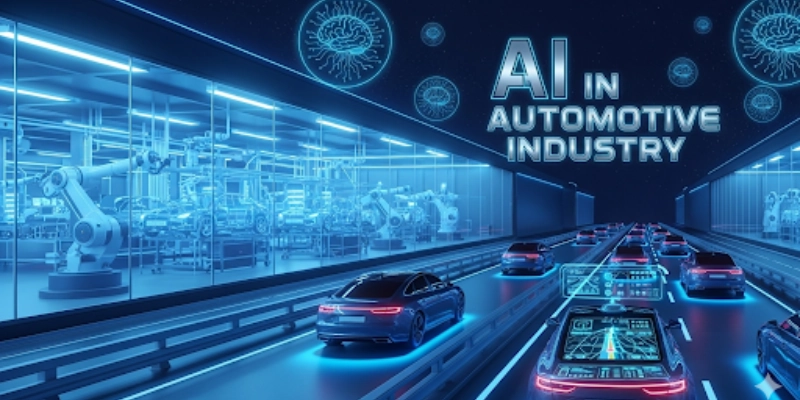
This blog discusses the role of AI in the automotive industry, highlighting how it is used across different areas. It also explores the benefits, challenges, and the promising future of artificial intelligence in shaping the automotive world.
Automotive Industry Before AI
Before the rise of artificial intelligence, the automotive industry relied mostly on manual processes and traditional technologies. Production, driving, and customer experience were simpler, but also limited in many ways.

- Manual manufacturing: Most tasks such as welding, painting, and assembly were labor-intensive and time-consuming.
- Human-led quality control: Detecting defects depended on human inspections, which were often less accurate.
- Basic safety features: Cars had airbags and seatbelts, but lacked intelligent safety systems like collision detection.
- Conventional maintenance: Vehicle care was reactive; problems were fixed only after they occurred.
- Limited personalization: Cars offered little customization in driving experience beyond mechanical adjustments.
- Slow supply chain: Demand forecasting and inventory management were manual, leading to inefficiencies.
The automotive industry worked well in this traditional model, but it lacked the speed, precision, and intelligence that AI now provides.
Role of AI in Automotive Industry
AI is changing every part of the automotive world. Its role goes far beyond self-driving cars and connects deeply with how vehicles are made, sold, and used. Below are some key areas where AI is creating impact:
- Beyond self-driving cars: AI is applied across multiple areas, not just autonomous vehicles.
- Manufacturing: AI improves efficiency, accuracy, and quality in car production.
- Sales and customer experience: Companies use AI to personalize services and predict customer needs.
- Driving experience: AI powers safety features, infotainment, and comfort systems.
- Cost reduction: Automation and predictive systems help manufacturers save time and money.
- Quality improvement: AI ensures vehicles meet higher safety and performance standards.
- Innovation: Automotive industry artificial intelligence delivers advanced features that redefine modern mobility.
In short, the role of AI in automotive industry is not limited to one area. It is shaping the entire ecosystem, from the factory floor to the driver’s seat.
AI in Automotive Manufacturing
Car production involves thousands of steps. AI in automotive manufacturing is transforming this process by:
- AI-powered robotics: Automated robots assemble, paint, and weld with precision.
- Computer vision for quality control: Detects defects that humans may miss.
- Smart supply chains: AI predicts demand and manages parts across global markets.
- Automation in factories: Reduces human error and speeds up production.
✅ Example: BMW and Toyota use AI automation companies like Siemens and ABB to streamline production and quality checks.
AI in Cars – Safety and Comfort
Modern vehicles are powered by AI automotive technologies that make driving safer and smarter.
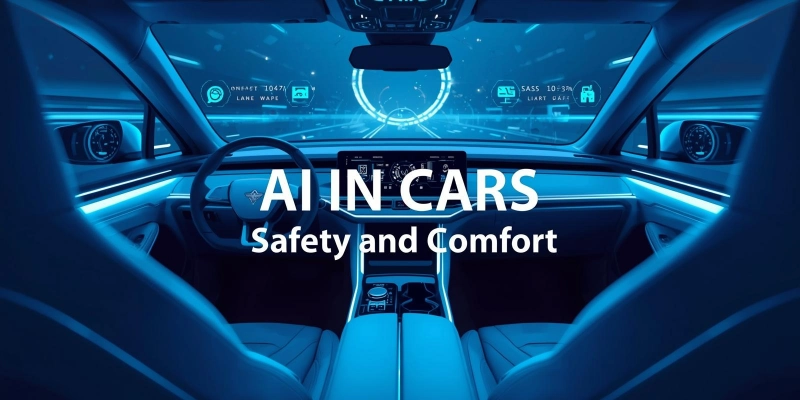
- Driver monitoring systems: Detect drowsiness and alert the driver.
- Collision prevention: Cars can stop automatically to avoid accidents.
- Adaptive cruise control: AI adjusts speed based on traffic.
- Smart infotainment: Personalized navigation, music, and voice control.
✅ Example: Mercedes-Benz uses automotive artificial intelligence systems in its MBUX infotainment, creating a personalized experience for every driver.
AI Driving Companies and Autonomous Vehicles
The biggest achievement of AI for automotive industry is autonomous driving. Self-driving cars rely on machine learning, sensors, and real-time decision-making.
- AI driving companies like Tesla, Waymo, and Cruise are testing autonomous vehicles.
- Navigation systems use AI to read traffic, maps, and signs.
- LiDAR and sensors detect people, cars, and objects.
- Algorithms decide when to stop, accelerate, or change lanes.
✅ Example: Waymo, an AI automotive company under Alphabet, is already operating self-driving taxis in select cities.
Predictive Maintenance – Smarter Vehicle Care
AI in the automotive industry also helps keep vehicles reliable through predictive maintenance.
- Real-time data monitoring of tires, brakes, and engines.
- Failure prediction before breakdowns occur.
- Cost savings by repairing issues early.
- Improved fleet management for logistics companies.
✅ Example: Audi uses AI in automotive industry applications to predict technical issues before they affect performance.
AI in Electric Vehicles (EVs)
AI for automotive industry plays a major role in the growth of EVs.
- Battery management: AI extends battery life and optimizes charging.
- Energy use optimization: Adjusts power based on driving habits.
- Route planning: Suggests charging points on the way.
- Smart charging stations: AI predicts energy demand.
✅ Example: Tesla is one of the leading AI automotive companies that use AI to guide EV drivers toward nearby charging stations.
Benefits of AI in Automotive Industry
The benefits of AI in automotive industry go beyond convenience. They include:
- Improved safety for drivers and pedestrians
- Faster and more efficient production lines
- Reduced operational costs for manufacturers
- Personalized and comfortable in-car experience
- Sustainability through electric and connected vehicles
AI Automotive Industry – Challenges Ahead
Even though the AI automotive industry is growing rapidly, there are still challenges:
- High costs of AI systems in vehicles
- Data privacy concerns with connected cars
- Government regulations for autonomous vehicles
- Ethical dilemmas in accident decision-making
- Cybersecurity risks from connected systems
Future of AI in Automotive Industry
The future of AI in automotive industry looks promising. More AI automotive companies and AI automation companies are investing heavily in research and innovation. Key trends include:
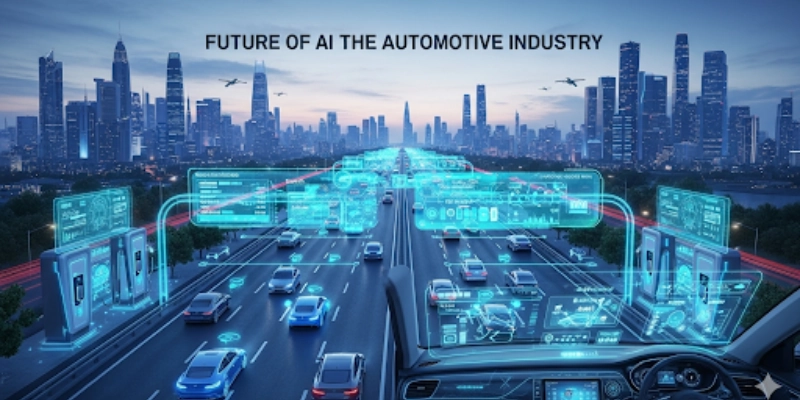
- Fully autonomous taxis and trucks powered by AI driving companies
- AI-powered EVs with improved batteries and charging infrastructure
- Hyper-personalized in-car experiences
- Connected cars communicating through 5G and IoT
- Growth of automotive artificial intelligence companies worldwide
AI in Automotive Industry Examples
Some real-world AI in automotive industry examples include:
- Tesla: Autonomous driving and EV route planning
- Waymo: AI-driven self-driving taxi services
- BMW: AI in automotive manufacturing and quality control
- Volvo: AI-powered safety systems like pedestrian detection
- Toyota: Smart supply chain optimization with AI
5 Hilarious Predictions About AI in Automotive Industry
Here are Most Funny Prediction of AI in Automotive Industry :
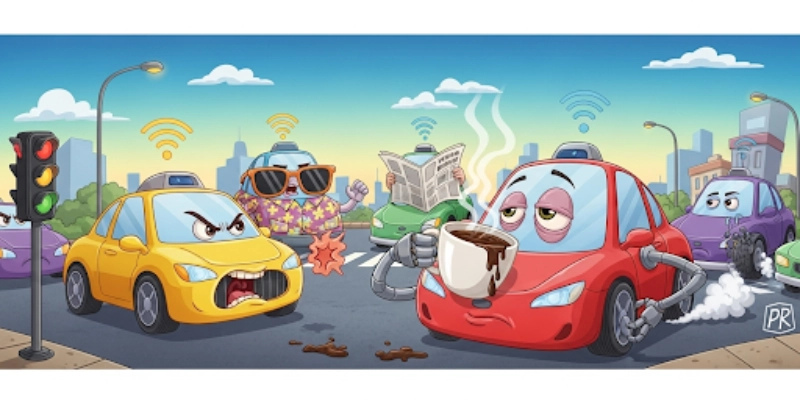
- Cars will gossip about you: Your AI car won’t just talk to you, it will text your friend’s car: “Guess who just spilled coffee on the seat again?”
- AI road rage: Instead of drivers honking, cars will start insulting each other in binary: “Beep beep 101010, loser!”
- Mood-based driving: If you’re sad, your AI car will drive slowly while playing breakup songs. If you’re happy, it might overspeed to the beat of your playlist.
- Self-driving pranks: Your car will randomly take you to the gym instead of home because it “cares about your health.” Thanks, AI.
- Car personalities: Future cars will have attitudes. Your BMW might act snobby, refusing to park next to a “cheap” car. Meanwhile, your Tesla keeps bragging about its software updates.
Conclusion
So guys in this article we have discussed Artificial Intelligence in Automotive Industry. The use of AI in automotive industry is transforming how cars are built, driven, and maintained. From factories to freeways, the AI automotive industry is revolutionizing how vehicles are built, driven, and maintained. The use of AI in automotive industry is expanding every year, covering production, customer experience, and autonomous driving.
The role of AI in automotive industry is both transformative and essential, delivering the benefits of AI in automotive industry like efficiency, safety, and smarter vehicles. While challenges remain, the future of AI in automotive industry is driven by the creativity of AI automotive companies, AI automation companies, and AI driving companies that continue to innovate.
Artificial intelligence is steering the automotive world into a new era, and the AI automotive revolution has only just begun.
❓ FAQs on AI and Automotive Industry
👉 To clear common doubts, here are some frequently asked questions that connect directly with our discussion on AI in the automotive industry.
Several AI companies are public and listed on major stock exchanges. Examples include NVIDIA, Alphabet (Google’s parent), and Microsoft, all of which invest heavily in artificial intelligence. These firms are leading in AI research, cloud solutions, and automotive AI applications.
➡ To see how these companies contribute to cars, read our insights on AI in the automotive industry.
Many AI companies are publicly traded, allowing investors to participate in the growth of artificial intelligence. Firms like IBM, Palantir, and Tesla have strong AI-driven operations and are available on markets like NASDAQ and NYSE. These companies focus on everything from AI data analytics to AI car companies innovations.
➡ Learn how such innovations are shaping the AI automotive industry.
Globally, there are thousands of AI startups and firms, but industry reports estimate over 15,000 registered AI companies worldwide. Out of these, many focus on healthcare, finance, and especially transportation. A growing number are entering the automotive sector, joining established AI automotive companies.
➡ Explore the role of AI in automotive industry to understand their impact.
The automotive industry refers to all businesses involved in the design, development, production, and sale of motor vehicles. This includes car manufacturers, parts suppliers, and now advanced technology providers. Today, the rise of automotive artificial intelligence companies is redefining the traditional industry model.
➡ Discover how AI is transforming the automotive industry artificial intelligence landscape.
AI car companies are businesses that use artificial intelligence to develop smart, connected, and autonomous vehicles. Examples include Tesla, Waymo, and NIO, all of which rely on AI for navigation, safety, and predictive maintenance. These companies represent the future of driving and mobility.
➡ Read more about AI autonomous vehicles in our full guide.





- Be Respectful
- Stay Relevant
- Stay Positive
- True Feedback
- Encourage Discussion
- Avoid Spamming
- No Fake News
- Don't Copy-Paste
- No Personal Attacks
- Be Respectful
- Stay Relevant
- Stay Positive
- True Feedback
- Encourage Discussion
- Avoid Spamming
- No Fake News
- Don't Copy-Paste
- No Personal Attacks
