AI in Agriculture for Better Crop Management
Published: 16 Aug 2025
Have you ever wondered how farmers know the best time to plant crops or detect pests early? AI is helping in agriculture to make these decisions smarter and faster.
From predicting weather and monitoring soil health to guiding machines for planting and harvesting, AI is changing the way farming is done.
In this article, we will explore the important Role of AI in Agriculture.
Agriculture Before AI
Before AI, farming was mostly traditional and depended on human effort. Farmers used their experience and manual tools to plant, water, and harvest crops. This took a lot of time and energy, and mistakes were common.
Farmers had to check crops themselves for diseases, pests, or water problems. Predicting the weather or knowing the best time to plant and harvest was also difficult, which sometimes caused crop losses.
Market decisions were harder, too. Farmers could not easily know which crops would sell well or the best price to get. Everything depended on experience, guesswork, and trial and error.
AI in Agriculture
Artificial intelligence (AI) is changing the way farmers grow food. From saving water to detecting pests early, AI helps farmers work smarter and more efficiently.
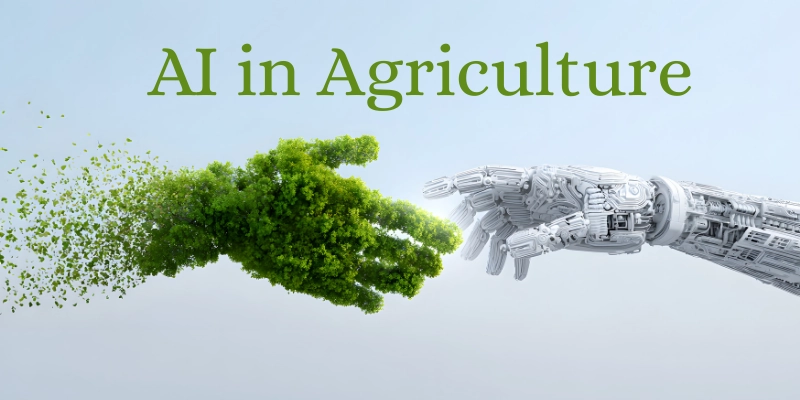
Let’s look at some key applications of AI in agriculture.
- Irrigation Systems:
AI can control irrigation in farms. Sensors in the soil measure water levels, and AI decides when and how much to water the crops. This saves water, reduces costs, and helps plants grow healthy.
Example: if part of a field is dry, AI can water only that area instead of the whole farm.
- Pest Detection:
AI can detect pests and diseases early using cameras, drones, and sensors. By analyzing images of crops, AI can spot tiny signs of infection or pest damage that farmers might miss.
Example: A farmer uses a drone with AI to spot tiny leaf spots on tomato plants, detecting pests before they spread.
- Health Monitoring:
AI monitors crop growth and health in real time. Drones or satellites can take pictures of fields, and AI analyzes them to check for problems like nutrient deficiency, poor growth, or weeds.
Example: A farmer uses a drone with AI to check the entire wheat field and quickly finds areas where plants are not growing well due to low nutrients.
- Machinery and Robots:
AI powers automated machinery and robots in farming. Robots can plant seeds, spray fertilizers, or harvest crops without constant human supervision. This saves time and labor, especially in large farms, and increases efficiency.
Example: A farm uses an AI-powered robot to plant seeds across a large field while the farmer monitors progress from a tablet.
- Management Decisions:
AI helps farmers make better decisions by analyzing all farm data. It can predict crop yields, suggest the best planting times, and recommend resource use like water, fertilizer, and pesticides. This leads to higher productivity, lower costs, and smarter farm management.
Example: AI analyzes farm data and advises a farmer to plant corn two weeks earlier to get a higher yield and save water.
Benefits of AI in agriculture
Artificial intelligence (AI) makes farming smarter and easier. It helps crops grow better, saves resources, and helps farmers make good decisions.
- Productivity: AI tells farmers the best time to plant, water, and use fertilizer, so crops grow more and stay healthy.
- Labor Costs: Using AI robots and machines, farmers need less manual work, which saves money on labor.
- Resources: Smart irrigation and AI monitoring give water and fertilizer only where needed, so nothing is wasted.
- Decision-making: AI studies farm data, predicts crop yields, and suggests the best time to plant and harvest, making planning easy.
How AI Works in Agriculture?
Agriculture is changing fast, and artificial intelligence (AI) is playing a big role. Farmers can now grow crops smarter, save money, and increase yields using AI. But how does AI work in agriculture?
Let’s explore it step by step.
- Farm Data
- Monitoring
- Predicting Wether
Let’s talk about them in detail.
Farm Data
AI starts by collecting data from the farm. This can include information about soil, water, weather, crops, and farm machinery. Sensors, drones, and satellites are often used to gather this data.
Once collected, AI analyzes it. It can detect patterns and give farmers useful insights. For example, AI can tell a farmer which part of the field needs more water or fertilizer. By understanding the farm data, farmers can make better decisions and improve productivity.
Monitoring
AI helps monitor soil, water, and crops in real time. Sensors in the soil can measure moisture, nutrients, and pH levels. AI can alert farmers if the soil is too dry or lacks nutrients.
Drones and cameras can watch crops from above. AI can detect early signs of disease, pests, or growth problems. This way, farmers can take action quickly, preventing crop loss and saving money.
Predicting Weather
The weather is very important in farming. AI can analyze past weather data and predict future conditions. Farmers can plan their planting and harvesting based on these predictions.
AI can also estimate crop yields by looking at growth patterns and environmental conditions. This helps farmers plan how much to sell, store, or use, reducing waste and increasing profits.
Challenges of AI in Agriculture
AI is very helpful in farming, but it also has some challenges.
- High Cost: AI machines and tools are expensive, and small farmers may find it hard to buy them.
- Skilled Workers: Farmers need training to use AI tools correctly; otherwise, they cannot use them well.
- Connectivity Issues: Many farms are in villages where internet and electricity are weak, which makes using AI difficult.
- Data accuracy: AI works only if the data is correct. Wrong or incomplete data can give wrong results.
Future Potential of AI in Agriculture
AI has a bright future in farming and can make it better and smarter.
- Sustainable Farming:
AI can help farmers grow crops in ways that use fewer resources and protect the soil and water. - Food Security:
AI can improve crop yields and predict problems early, helping to produce enough food for everyone. - Environmental Impact:
AI can reduce waste, use less water and chemicals, and lower pollution, helping the environment.
Funny Predictions
- Robot Farmers: Soon, AI-powered robots might plant seeds, water crops, and even talk to them: “Grow faster, little carrot, I believe in you!”
- Smart Crop Advice: AI could start giving advice like: “Don’t eat too much sun today, you might get sunburned, Mr. Tomato!”
- Animal Assistance: Imagine AI telling cows, “Chew slower, we need more milk!” or chickens: “No gossiping during egg-laying hours!”
- Weird Weather Warnings: AI might warn farmers: “Today’s storm might rain marshmallows… just kidding, but watch out for hail!”
- Overly Helpful Drones: AI drones could start being too helpful: “Hey farmer, you forgot your hat… and your lunch… and your tractor key!”
Conclusion
In this article, we’ve explored the Artificial Intelligence in agriculture. AI is transforming modern farming by helping farmers monitor crops, predict weather, and manage resources more efficiently. It improves crop yield, reduces waste, and makes farming smarter and faster.
Adopting AI is important for sustainable agriculture because it helps grow food responsibly while protecting the environment. Using AI in farming ensures a better future for farmers and the planet.
I hope this article helped you understand AI in agriculture. Share your thoughts in the comment section below!
FAQs
Have questions about Role of Artificial Intelligence in agriculture? Find the answers in the FAQs below!
AI in agriculture means using computers and smart machines to help farmers. It collects and studies farm data, watches crops and soil, and predicts weather and yields. This helps farmers grow food better, save resources, and make smart decisions.
AI helps farmers by giving information about soil, water, and crops. It can detect pests, monitor crop health, and predict weather or crop yields. This helps farmers make better decisions, save time, reduce costs, and grow more food.
Yes, AI can reduce farming costs. It helps farmers use water, fertilizer, and pesticides efficiently, avoiding waste. AI-powered machines and robots also reduce the need for manual labor, saving money on workers.
Yes, AI can predict crop diseases. It uses cameras, drones, and sensors to monitor crops and detect early signs of pests or infections. This helps farmers take action quickly and prevent crop loss.
AI helps in irrigation by using sensors and smart systems to measure soil moisture. It decides when and how much water each part of the field needs. This saves water, ensures healthy crops, and reduces waste.
Yes, AI can be useful for small farmers. It helps them monitor crops, save water and fertilizers, and make better decisions. Even with smaller farms, AI can increase productivity and reduce costs if affordable solutions are used.
Yes, AI can increase crop production. It helps farmers choose the best planting times, monitor crop health, and manage water and nutrients efficiently. This leads to healthier plants and higher yields.
Yes, AI reduces the need for manual labor. Robots and automated machines can plant seeds, water crops, spray fertilizers, and even harvest produce. This saves time, effort, and labor costs for farmers.
Yes, AI will change the future of farming. It can make farming smarter, more efficient, and sustainable. With AI, farmers can grow more food, use fewer resources, and protect the environment.
Yes, AI can predict the weather for farmers. It analyzes historical data and current conditions to forecast rain, temperature, and storms. This helps farmers plan planting, watering, and harvesting more effectively.






- Be Respectful
- Stay Relevant
- Stay Positive
- True Feedback
- Encourage Discussion
- Avoid Spamming
- No Fake News
- Don't Copy-Paste
- No Personal Attacks
- Be Respectful
- Stay Relevant
- Stay Positive
- True Feedback
- Encourage Discussion
- Avoid Spamming
- No Fake News
- Don't Copy-Paste
- No Personal Attacks
