How to Use AI in Daily Life – Simple Ways to Use AI Every Day
Published: 5 Nov 2025
Artificial Intelligence, or AI, is a smart technology that helps us in many ways. It makes our daily life easier, faster, and more fun. You may not always see it, but AI works quietly behind the apps, tools, and machines we use every day. From voice helpers on your phone to shopping apps that know your taste, AI is all around you.
In this guide, you’ll learn how to use AI in daily life through simple examples and easy steps that anyone can understand.
How to Use AI in Daily Life – Step by Step Guide
AI is not just for big companies or tech experts. It’s something we all use at home, in school, at work, and even while relaxing. These tools make things simple and save time in many small ways. Let’s look at how we use AI in our daily life through real examples you see every day.
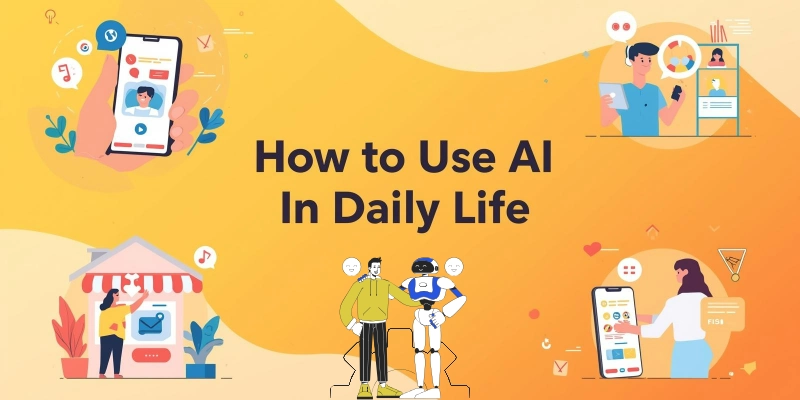
List of Uses:
- AI in Smartphones
- AI in Home
- AI in Education
- AI in Shopping
- AI in Healthcare
- AI in Transport
- AI in Entertainment
- AI in Banking
- AI in Business/Work
- AI in Social Media
AI is not magic, it’s a helper that learns from what you do and tries to make life smoother. Now let’s explore each use and see how AI is useful in daily life with simple examples.
1. AI in Smartphones
AI makes your phone smart enough to understand you and help you without much effort. It learns your habits and gives quick answers. It also improves the phone’s camera, apps, and even battery life.
How AI helps in smartphones:
- Voice assistants like Siri or Google Assistant answer your questions.
- The camera uses AI to take clear, bright pictures.
- It suggests the contacts or apps you use most.
- Auto-correct and smart typing make texting easy.
- Battery saving mode adjusts to your usage.
Example: When you say, “Hey Siri, remind me to call mom at 6,” your phone listens and sets the reminder that’s AI helping in real life.
AI in phones makes life simple and helps you do daily tasks without even touching the screen.
2. AI in Home
AI turns ordinary homes into smart ones. It helps you manage lights, temperature, and safety with a simple voice command. Smart home devices save energy and make life more comfortable.
How AI helps at home:
- Smart speakers play songs or news when you ask.
- Lights and fans turn on or off by command.
- Security cameras send alerts if someone comes near.
- Cleaning robots sweep the floor for you.
- Smart TVs suggest shows you’ll enjoy.
Example: Saying “Alexa, play my favorite playlist” and hearing your music start right away is one of the easiest AI uses in daily life.
With AI, your home listens, learns, and works the way you want all to make life easier.
3. AI in Education
AI has changed how students learn and teachers teach. It helps you study smarter and gives quick feedback. Many schools now use AI tools to help students learn at their own speed.
How AI helps in education:
- AI tutors explain lessons in a simple way.
- Grammar tools check spelling and writing.
- Learning apps adjust lessons to your level.
- Teachers use AI to check homework fast.
- AI sends reminders about study time.
Example: When a student uses Khan Academy or Duolingo, the app tracks their progress and gives new lessons. That’s how AI helps learning fun and personal.
AI in education supports both teachers and students, making learning easier and more interesting.
4. AI in Shopping
AI makes shopping easy and personal. It remembers what you like and suggests items that match your taste. It also helps companies understand what people want.
How AI helps in shopping:
- Online stores show items you may like.
- Chatbots answer your questions anytime.
- Find discounts and best prices.
- Suggests your right size or color.
- Tracks your orders and delivery status.
Example: When Amazon shows “You may also like this,” that’s AI finding similar products based on your past shopping.
AI helps shoppers save time and money, while also making shopping more fun and convenient.
5. AI in Healthcare
AI is now a helpful partner in hospitals and homes. It helps doctors, patients, and even fitness lovers. It checks health data, gives reminders, and tracks your progress.
How AI helps in healthcare:
- Fitness apps track your steps and heartbeat.
- AI reminds you to take medicine on time.
- Health apps tell symptoms and suggest care.
- Doctors use AI to read X-rays and tests.
- AI shares health and diet tips.
Example: A smartwatch warning you that your heart rate is too high is a simple AI use in daily life.
AI in healthcare helps people stay healthy and gives doctors extra support to care for patients.
6. AI in Transport
AI makes travel smarter and safer. It helps drivers find faster routes, saves fuel, and even guides airplanes. Many transport apps you use every day run on AI.
How AI helps in transport:
- Google Maps finds the fastest way to your destination.
- AI warns about traffic jams or roadblocks.
- Cars use AI for auto parking and driving help.
- Flight apps give live updates.
- Bus and train apps track arrival time.
Example: When your map app says “Take a left to avoid traffic,” it’s AI using real-time data to save your time.
AI in transport helps people travel smoothly and safely, wherever they go.
7. AI in Entertainment
AI knows what you like to watch, play, or listen to. It makes your free time more fun and helps you find new things to enjoy.
How AI helps in entertainment:
- Suggest movies or songs you may like.
- Adds fun filters to photos and videos.
- Creates smart moves in games.
- Helps artists make music or art.
- Edits videos and sound automatically.
Example: When Netflix says “Because you watched…” and shows similar movies, that’s AI learning your taste.
AI in entertainment turns free time into a fun, personal experience just for you.
8. AI in Banking
AI is now a big part of how we handle money. It keeps your bank account safe, gives spending advice, and helps with online services.
How AI helps in banking:
- Detects fake or risky transactions.
- Chatbots answer customer questions.
- Recommend ways to save money.
- Helps in online loan approval.
- Tracks account activity easily.
Example: When your bank app warns you about an unusual payment, that’s AI protecting your account.
AI in banking keeps your money secure and makes digital banking easy for everyone.
9. AI in Business or Work
AI helps people work smarter and faster. It takes care of small tasks, so employees can focus on big ideas. Many offices use AI tools daily to stay organized.
How AI helps in work:
- Chatbots help customers instantly.
- AI tools schedule meetings automatically.
- Helps write reports or emails.
- Tracks company data and performance.
- Supports decision-making with reports.
Example: When you use Grammarly to fix your writing, that’s AI improving your work quality.
AI in work makes jobs easier and helps people use their time wisely.
10. AI in Social Media
AI helps make your social media feed more interesting and safe. It shows posts that match your likes and hides harmful content. It also helps creators reach the right audience.
How AI helps in social media:
- Suggest friends or pages you may like.
- Filters spam or fake news.
- Recommends videos or reels.
- Detects and removes harmful content.
- Helps brands target the right audience.
Example: When Instagram shows you similar videos to what you just liked, that’s AI learning your interests.
AI in social media makes your feed fun, personal, and safer every day.
Application of AI in Daily Life
AI is used almost everywhere in phones, schools, offices, and homes. It helps you shop, learn, travel, and even stay healthy. These AI applications in daily life make everyday tasks faster, easier, and more personal.
Limitations of AI in Daily Life
AI is smart, but it’s not perfect. Sometimes it makes mistakes or doesn’t understand human feelings. It also depends on the internet and needs data to work properly. Privacy can be a problem if information is not kept safe.
Example: A chatbot might give the wrong answer if it doesn’t fully understand your question.
How AI Solves These Limitations
AI is improving every day. Developers are finding new ways to fix its weaknesses and make it safer to use. People can now control how much data AI tools collect and share.
How AI is improving:
- Regular updates make AI smarter and more accurate.
- Privacy laws protect user data.
- Better AI designs understand natural speech.
- Human checks help AI avoid big errors.
Example: When your phone asks for permission before using your data, that’s AI respecting your privacy.
AI may have limits, but it keeps learning to make daily life safer and smarter for everyone.
Conclusion
So guys in this we have discussed how we use AI in our daily life in detail. AI is no longer a thing of the future, it’s part of our daily life today. From phones and classrooms to banks and homes, AI helps in countless small ways. Knowing how to start using AI in your daily life helps you save time and enjoy more comfort every day.
As we keep learning how to use AI in real life. We can see that AI is not here to replace people, it’s here to help us live better, smarter, and easier lives.
Want to explore this topic more deeply? Read our next article on AI in Daily Life to see more real examples of how AI makes everyday tasks simple and smart.
Frequently Asked Questions
Want to know more about how AI helps in real life? These simple questions and answers will help you understand how to use AI in your daily life and how AI agents work in your routine tasks.
You can use AI in phones, shopping apps, learning tools, and even in your car. It helps with small daily tasks like reminders, maps, and typing. AI saves time and makes life more comfortable.
AI agents are smart programs that do tasks for you. You can use them to book tickets, reply to emails, or set reminders automatically. They make your daily work faster and easier.
AI is used in smartphones, education, shopping, health, and transport. It gives movie or music suggestions, tracks your health, and helps in navigation. These are simple AI uses in daily life we see every day.
You use AI every time you search on Google, get a YouTube suggestion, or ask Siri a question. Even when you type and get auto-correct help, AI is working. It’s quietly making your daily tasks smoother.
Begin with small steps like using voice assistants or AI-powered apps. Try tools that help with learning, shopping, or health tracking. The more you use them, the easier it gets to understand how to use AI in real life.
AI saves time and helps in many small tasks. It gives you quick answers, plans your schedule, and even helps in travel or study. That’s why AI is becoming a big part of our everyday lives.
AI reduces effort and helps in doing things quickly. It makes services personal, like showing things you like online. It also improves learning, safety, and communication.
Students can use AI tools like grammar checkers, math solvers, or study planners. These tools give feedback and help in learning faster. They also remind students about study schedules or tests.
Businesses use AI to answer customer questions, write reports, and manage data. It helps workers save time on simple tasks. Many offices now use AI agents to schedule meetings and send updates.
AI will become even smarter and easier to use. In the future, AI agents may handle most of our simple work automatically. It will help people focus more on creative and important things.




- Be Respectful
- Stay Relevant
- Stay Positive
- True Feedback
- Encourage Discussion
- Avoid Spamming
- No Fake News
- Don't Copy-Paste
- No Personal Attacks
- Be Respectful
- Stay Relevant
- Stay Positive
- True Feedback
- Encourage Discussion
- Avoid Spamming
- No Fake News
- Don't Copy-Paste
- No Personal Attacks
