Top 10 Pros and Cons of AI in Business
Published: 7 Sep 2025
Artificial Intelligence (AI) has moved from being a futuristic concept to a practical tool shaping modern businesses. From chatbots to predictive analytics, AI is quietly becoming the backbone of operations in many industries. Companies are using it to improve customer service, automate tasks, and make faster decisions. At the same time, there are growing concerns about its costs, risks, and ethical challenges.
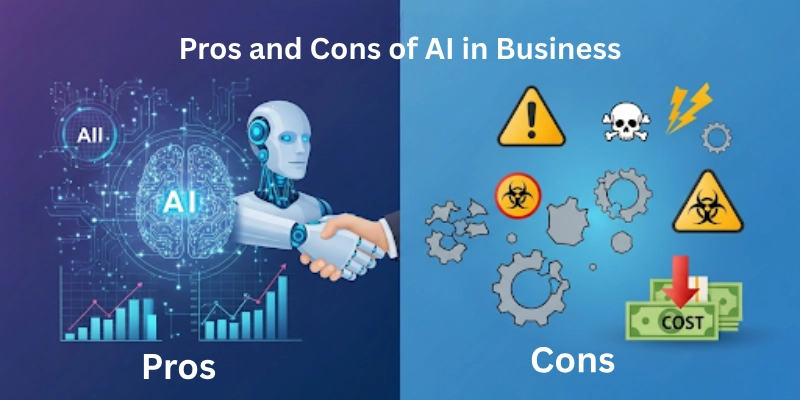
Understanding the pros and cons of AI in business is crucial. While the business benefits of AI can’t be denied, it’s equally important to address the disadvantages of AI in business. If not used wisely, AI can harm as much as it helps. In this blog, we’ll dive deep into the advantages and disadvantages of AI in business, covering real-world examples, a comparison table, and even future trends.
Pros and Cons of AI in Business
AI offers opportunities like efficiency, scalability, and innovation, but also introduces risks like job loss, high costs, and bias. To make informed decisions, businesses must see both sides clearly. Let’s begin with the pros before moving into the cons.
Pros of AI in Business
Before diving into the details, here’s a quick overview of the top advantages of AI in business:
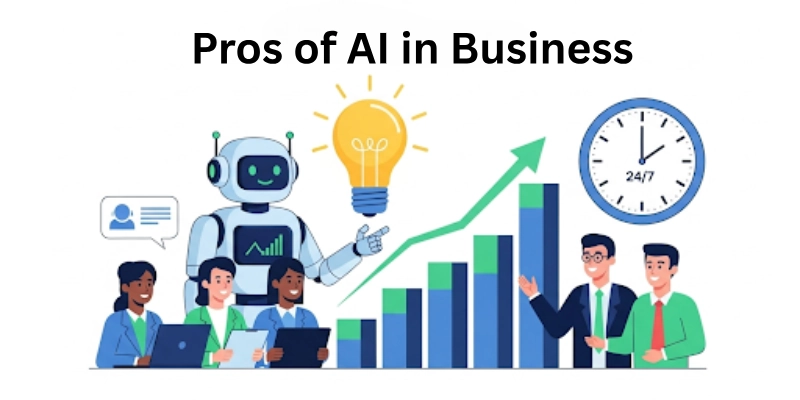
Quick List of Pros
- Improved Efficiency and Productivity
- Better Decision-Making
- Enhanced Customer Experience
- Cost Savings
- 24/7 Availability
- Data Handling and Analytics
- Increased Accuracy
- Scalability
- Competitive Advantage
- Innovation Opportunities
AI’s benefits are broad and impactful, making it a game-changer in nearly every sector. Now, let’s explore each of these pros in detail to see how they help businesses thrive.
1. Improved Efficiency and Productivity
AI automates repetitive tasks, freeing employees to focus on higher-value work. This boosts overall business efficiency and reduces wasted time.
- Automates manual processes like scheduling or data entry.
- Speeds up workflow across departments.
- Reduces human fatigue and error.
- Handles complex tasks faster than humans.
2. Better Decision-Making
AI systems can analyze massive amounts of data to provide insights that guide smarter decisions. Businesses no longer need to rely only on human intuition.
- Processes data faster than traditional methods.
- Identifies patterns that humans may miss.
- Supports predictive modeling for business growth.
- Reduces risk by providing evidence-based insights.
3. Enhanced Customer Experience
AI tools like chatbots and personalization engines are reshaping how customers interact with brands. This leads to happier and more loyal customers.
- Provides instant customer service through chatbots.
- Personalizes product recommendations.
- Improves response time to queries.
- Collects customer feedback efficiently.
4. Cost Savings
AI reduces costs by streamlining operations and minimizing human errors. Over time, this leads to substantial financial savings.
- Cuts down labor costs by automating tasks.
- Minimizes expenses due to errors or rework.
- Optimizes resource use.
- Reduces operational inefficiencies.
5. 24/7 Availability
Unlike humans, AI systems don’t need breaks or sleep. They can operate around the clock to serve customers and manage tasks.
- Provides continuous customer support.
- Ensures business continuity.
- Handles global operations in different time zones.
- Monitors systems day and night.
6. Data Handling and Analytics
AI can process huge amounts of data that humans can’t handle alone. It makes sense of raw data to generate valuable insights.
- Analyzes structured and unstructured data.
- Improves accuracy of forecasts.
- Identifies market trends.
- Helps track customer behavior.
7. Increased Accuracy
With AI, businesses can achieve greater precision in tasks like calculations, data entry, or diagnostics. This reduces costly mistakes.
- Reduces human errors.
- Ensures consistent performance.
- Increases reliability in sensitive industries like healthcare.
- Improves overall quality of work.
8. Scalability
AI systems can scale up operations quickly without major resource investments. Businesses can grow without proportional increases in cost.
- Handles more workload without new staff.
- Supports rapid business growth.
- Easily integrates with digital systems.
- Adjusts to market demand faster.
9. Competitive Advantage
Early AI adopters gain an edge over competitors who still rely on traditional methods. It helps them stand out in the market.
- Provides unique customer experiences.
- Optimizes marketing campaigns.
- Improves decision-making speed.
- Enhances product development.
10. Innovation Opportunities
AI drives innovation by enabling businesses to try new models and services. It’s a launchpad for creative solutions.
- Inspires new product ideas.
- Supports research and development.
- Enables automation in creative fields.
- Pushes industries toward digital transformation.
Cons of AI in Business
Just like AI delivers many advantages, it also brings several challenges. Businesses need to be aware of these disadvantages before making large investments. Here are the most common drawbacks of AI in business:
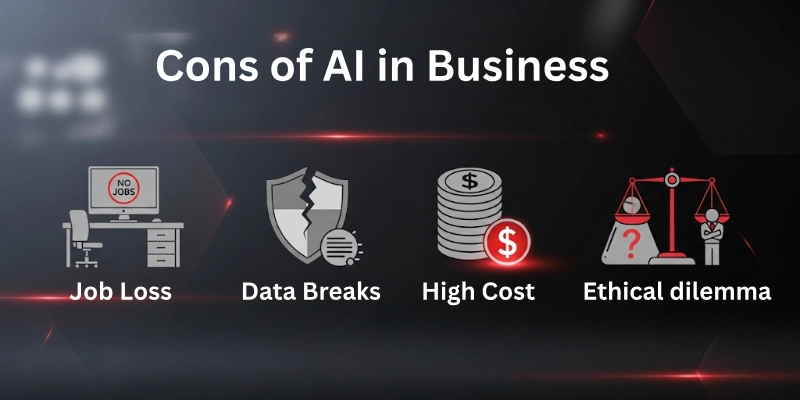
Quick List of Cons
- High Implementation Costs
- Job Displacement
- Data Privacy Issues
- Dependence on Technology
- Lack of Human Touch
- Ethical Concerns
- Limited Creativity
- Maintenance and Updates
- Risk of Bias
- Security Threats
While the advantages are strong, the disadvantages of AI in business cannot be ignored. Let’s break down these challenges one by one to understand why businesses must approach AI carefully.Let’s explore them in detail.
1. High Implementation Costs
Setting up AI systems can be expensive, especially for small businesses. The initial investment often becomes a barrier to adoption.
- Requires costly infrastructure and software.
- Needs skilled experts for setup.
- Demands ongoing training for staff.
- Upgrades can add to expenses.
2. Job Displacement
AI automates jobs that humans once performed, leading to unemployment concerns. This is one of the biggest disadvantages of AI in the workplace.
- Replaces repetitive manual jobs.
- Reduces demand for certain skills.
- Creates fear and resistance among employees.
- Increases unemployment in some industries.
3. Data Privacy Issues
AI relies on massive amounts of data, which can pose privacy risks. Businesses must handle data responsibly to avoid problems.
- Increases risk of data misuse.
- Raises compliance challenges.
- Can expose sensitive customer information.
- Leads to public distrust if mismanaged.
4. Dependence on Technology
Over-reliance on AI may weaken human skills and judgment. Businesses risk being too dependent on machines.
- Reduces human involvement in decision-making.
- Increases vulnerability if systems fail.
- Creates skill gaps in the workforce.
- May hinder creativity and critical thinking.
5. Lack of Human Touch
AI cannot replace genuine human emotions and empathy. In some areas, this can hurt customer relationships.
- Fails to understand complex emotions.
- Lacks empathy in customer support.
- Makes interactions feel robotic.
- Can reduce customer loyalty.
6. Ethical Concerns
AI raises moral questions about fairness, transparency, and accountability. Unchecked AI can create serious ethical dilemmas.
- May lead to unfair hiring practices.
- Lacks transparency in decision-making.
- Raises concerns over surveillance.
- Creates accountability issues.
7. Limited Creativity
AI can mimic creativity but cannot truly innovate like humans. It’s restricted to the data it learns from.
- Struggles with out-of-the-box ideas.
- Cannot generate emotions-driven content.
- Depends on patterns, not imagination.
- Risks producing repetitive results.
8. Maintenance and Updates
AI systems require regular updates to remain effective. This adds extra cost and effort for businesses.
- Needs frequent software updates.
- Involves costly maintenance.
- Can cause downtime during upgrades.
- Requires ongoing technical support.
9. Risk of Bias
Since AI learns from data, biased data can produce unfair results. This can harm business reputation and customer trust.
- Creates discrimination in hiring or lending.
- Produces skewed analysis.
- Reinforces existing stereotypes.
- Damages brand credibility.
10. Security Threats
AI systems are vulnerable to cyberattacks and hacking attempts. Businesses must strengthen security measures.
- Attracts advanced cybercriminals.
- Can be exploited to spread misinformation.
- Increases risk of data theft.
- Requires strong cybersecurity defenses.
Comparison Table: Pros vs Cons of AI in Business
| Pros of AI in Business | Cons of AI in Business |
| Automates tasks | High initial investment |
| Improves decision-making | Job displacement |
| Enhances customer service | Disadvantages of AI in business (privacy, bias, cost) |
| Reduces operational costs | Risk of bias in AI |
| Ensures data accuracy | Dependency on technology |
| Supports scalability | Complex to implement |
| Builds competitive edge | High maintenance costs |
| Provides 24/7 availability | Lacks human touch |
| Drives innovation | Ethical concerns |
| Offers predictive analytics | Security risks |
Striking the Balance
AI is a powerful ally, but businesses should not rely on it blindly. Combining AI with human intelligence is the key. For example, banks use AI for fraud detection, but human auditors ensure fairness in decision-making. Similarly, customer service chatbots can handle simple queries, but complex issues still need human intervention.
To avoid the disadvantages of AI in business, leaders should focus on a hybrid model where machines handle repetitive work, and humans provide creativity, empathy, and oversight. This balance helps businesses maximize efficiency without losing their human touch.
Future of AI in Business
Looking ahead, AI will become more affordable and accessible, especially for small and medium businesses. Cloud-based AI tools are already making adoption easier. In banking, the advantages and disadvantages of AI in banking will continue to evolve as fraud detection, customer personalization, and compliance improve. However, stricter regulations will also come into play to address issues like bias and data privacy.
The future lies in responsible AI. Companies that use AI ethically will gain customer trust and long-term growth. Those that misuse it may face reputational damage and legal consequences. Businesses must start preparing today by setting policies, investing in training, and ensuring transparency.
Conclusion
So guys in this article we have discussed Pros and Cons of Artificial Intelligence in Business. AI is transforming the business world at an incredible pace. The business benefits of AI include efficiency, accuracy, and innovation. At the same time, the disadvantages of AI in business, like high costs, job loss, and ethical concerns, cannot be overlooked.
The smartest companies will see AI not as a replacement, but as a tool to work alongside humans. By balancing its advantages and disadvantages of AI in business, companies can unlock AI’s potential while avoiding its pitfalls.
So, is your business ready to embrace AI wisely?
FAQs
Here are some more questions people also ask about advantages and disadvantages of artificial intelligence in business:
AI helps companies improve efficiency, reduce costs, and make smarter decisions. It also enhances customer experience and drives innovation.
The disadvantages include job displacement, reduced human interaction, and over-reliance on machines. Workers may also face skill gaps.
AI boosts fraud detection, customer support, and efficiency in banking. But it also raises concerns like high costs, data privacy issues, and bias.
AI risks include cybersecurity threats, biased results, and data misuse. Businesses may also become too dependent on technology.
AI chatbots and virtual assistants provide instant, 24/7 support. They personalize responses and reduce waiting times for customers.
AI is automating many repetitive jobs but also creating new ones. The key is reskilling workers to collaborate with AI systems.
Yes, but gradually. Affordable cloud-based AI tools help small businesses improve efficiency and compete without huge costs.




- Be Respectful
- Stay Relevant
- Stay Positive
- True Feedback
- Encourage Discussion
- Avoid Spamming
- No Fake News
- Don't Copy-Paste
- No Personal Attacks
- Be Respectful
- Stay Relevant
- Stay Positive
- True Feedback
- Encourage Discussion
- Avoid Spamming
- No Fake News
- Don't Copy-Paste
- No Personal Attacks
