Future of AI – How Artificial Intelligence Will Change the World
Published: 19 Aug 2025
Artificial Intelligence (AI) is no longer science fiction, it’s a driving force behind how businesses grow, how we live, and how technology evolves. From voice assistants to self-driving cars and intelligent business tools, AI is already embedded in our daily lives.
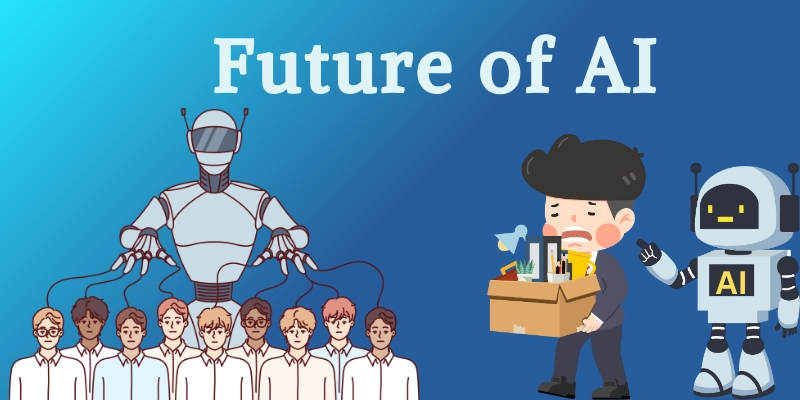
But the bigger question is, how will AI change the world? The future of AI is not just about smarter machines it’s about transforming entire industries, reshaping jobs, and redefining how humans and technology work together.
In this comprehensive article, we explore the Future of AI, key trends shaping its evolution, the industries it’s transforming, the ethical debates surrounding it, and what we can expect in the years to come.
A Quick Look at Where AI Stands Today
AI has evolved from simple rule-based programs into powerful machine learning systems that can understand language, generate content, detect diseases, and even predict market trends.
Some current applications include
- Generative AI tools like ChatGPT, DALL·E, and Midjourney.
- Facial recognition in phones and surveillance systems.
- Recommendation engines on Netflix, YouTube, and Amazon.
- AI in customer support, logistics, fraud detection, and more.
According to a 2024 McKinsey report, AI adoption has more than doubled since 2017, and nearly 60% of businesses globally are now using at least one AI-powered tool.
🚀 The Key Trends Shaping the Future of AI
As we move deeper into this decade, AI is evolving fast, not just improving, but transforming.
- Productivity AI
- Human-Like AI
- Multimodal AI
- Edge AI
- Responsible AI
Let’s explore the trends that will define the next 5–10 years.
Productivity AI
Generative AI will move beyond content creation. It will:
- Automate workflows in sales, design, writing, marketing, and HR.
- Serve as AI copilots in apps like Google Workspace and Microsoft 365.
- Help small businesses compete with enterprise-level operations.
By 2030, most professionals will use an AI assistant daily, not just for ideas, but for execution.
Let’s talk about another trend.
Human-Like AI
AI systems will better understand context, emotion, and tone. It includes:
- Emotionally aware virtual assistants.
- AI chatbots for mental health and coaching.
- Better natural language understanding in all industries.
Voice-based AI will become smarter, and video generation from text (like OpenAI’s Sora) will redefine how we create media.
Let’s talk about another trend.
Multimodal AI
Today’s AI mostly understands one input at a time (text or image). The future is multimodal, where systems interpret text, voice, image, and video together.
Cases
Here are some cases of multimodal AI.
- AI that reads a document, watches your facial expression, and adjusts tone.
- Personal assistants that listen, see, and respond like a human.
- Smart home systems that combine camera vision + voice understanding.
Let’s talk about another trend.
Edge AI
Edge AI will power real-time intelligence in phones, cameras, cars, and smart devices without needing internet access.
Benefits
Here are some benefits of Edge AI.
- Faster performance.
- Improved privacy (no cloud data storage).
- Useful in remote, low-bandwidth areas.
Edge AI is already in action in Tesla’s self-driving software and iPhones’ Face ID. In the future, it will be standard.
Let’s talk about another trend.
Responsible AI
Trust in AI is becoming a major concern, especially in healthcare, finance, and law. The future of AI must be transparent and accountable.
Expect to see
Here are some expectations to see.
- Explainable AI (XAI) that shows how a decision was made.
- Auditable models that can be reviewed for fairness.
- AI ethics teams in every major tech firm.
Governments will also regulate AI more tightly; the EU AI Act, for example, already bans certain high-risk uses of AI.
🏭 AI’s Role in Transforming Major Industries
AI is not limited to big tech; it’s radically changing how traditional industries operate.
💊 Future of AI in Healthcare
Here is the role of AI in healthcare.
- Early diagnosis using predictive models (e.g., cancer, Alzheimer’s).
- Robotic surgeries with high precision.
- AI-powered drug discovery (faster than traditional R&D).
🎓 Future of AI in Education
Here is the role of AI in education.
- Personalized learning experiences based on a student’s pace.
- AI tutoring tools like Khanmigo and ScribeSense.
- Automated grading and curriculum planning.
🚗 Future of AI in Transportation
Here is the role of AI in transportation.
- Fully autonomous vehicles in commercial fleets (trucking, taxis).
- AI-powered traffic management,
- Predictive maintenance for public transport.
🏢 Future of AI in Business
Here is the role of AI in business and finance.
- AI-driven customer insights and marketing personalization.
- Risk prediction and fraud detection in banking.
- AI in HR for recruitment, resume screening, and employee retention.
How Will AI Change the World?
AI will change the world in many ways some we are already experiencing, and others still to come. Here’s what we can expect:
- Healthcare: Faster disease detection, personalized treatments, and AI-powered drug discovery.
- Education: Smarter tutoring tools and personalized learning paths for every student.
- Transportation: Safer, self-driving vehicles and AI-managed traffic systems.
- Business: AI assistants that handle complex tasks, optimize decisions, and unlock new opportunities.
- Daily Life: Smart homes, better shopping recommendations, and AI that makes everyday tasks easier.
By 2030, AI won’t just be a tool it will be a global partner in shaping economies, societies, and human progress.
📈 Future of AI Jobs
While AI will automate many tasks, it’s also creating new career paths.
New Jobs That Will Be in Demand.
- AI ethicist and compliance officer.
- Prompt engineer.
- Machine learning operations (MLOps) specialists.
- Human-AI interaction designers.
According to the World Economic Forum, 69 million new roles related to AI and digital tech could emerge globally by 2027.
The future workforce won’t compete with AI; it will work alongside it.
⚠️The Future of Artificial Intelligence Opportunities and Challenges
AI isn’t perfect, and the road ahead includes major hurdles.
- Bias in AI models can cause discrimination and unfair outcomes.
- Lack of global regulation leaves room for misuse.
- Cybersecurity threats like AI-generated phishing and deepfakes.
- Data privacy concerns, especially with generative tools.
But with responsible development, many of these can be mitigated.
🔮 Future of AI 2030
Looking ahead, we’re likely to see:
- AI copilots in every industry: law, education, medicine, and engineering.
- Hyper-personalized experiences in shopping, learning, and health.
- Human-machine collaboration that’s seamless, not scary.
- AI-powered sustainability efforts to fight climate change and waste.
- AI is playing a role in governance, policymaking, and national security.
AI won’t just change how we use tech; it’ll reshape the economy, society, and global balance of power.
🧠 Conclusion
So guys in this article we have discussed Future of Artificial Intelligence in detail. Artificial Intelligence is advancing faster than any previous technology in history. Whether you’re a business leader, a student, or an everyday user, AI will influence how you think, work, and live in the coming decade.
The future of AI is filled with opportunity, but also responsibility. As creators, users, and citizens, we must demand transparency, fairness, and inclusion in how these systems are built and deployed.
AI isn’t just the future of tech, it’s the future of us.
I hope you enjoyed learning about the future of AI. Share your opinions in the comment section below!
FAQs
Curious about the future of AI? Explore the FAQs below for more insights.
The future of AI looks very bright and powerful. It will become smarter, more human-like, and help people in their daily work. AI will also be safer, more trusted, and used everywhere from homes to big industries.
In the next decade, AI will change the world by transforming healthcare, education, business, and transport. It will create new jobs, solve global challenges like climate change, and make daily life more efficient and personalized.
AI is not fully taking over, but it is changing the way we live and work. It helps people finish tasks faster and makes hard jobs easier. Still, humans control AI and decide how it should be used. In the future, it will act more like a partner than a replacement.
AI cannot truly predict the future, but it can guess what might happen using past data and patterns. For example, it can forecast weather, sales, or trends. However, it is never 100% accurate because the future is always uncertain.
AI may replace some finance tasks like data entry, risk analysis, or report making. But it will not fully replace finance jobs because human judgment, creativity, and decision-making are still important. Instead, AI will work with people to make finance faster and smarter.
Yes, AI can help solve global problems by finding smart solutions faster than humans. It can study huge amounts of data to fight climate change, improve healthcare, and manage food supply. AI also helps in disaster prediction, making the world safer and more prepared.
AI can automate many accounting tasks like bookkeeping, data entry, and report generation. But it will not fully replace accountants because businesses still need human judgment, problem-solving, and advice.
In 10 years, AI will likely be part of almost everything we use in daily life. It may power smarter healthcare, education, transport, and business tools. AI will be more human-like, safer, and work closely with people instead of fully replacing them.
The future of gaming consoles looks more powerful and connected. Consoles may focus on cloud gaming, faster performance, and realistic graphics. They will also bring more immersive experiences with AI, VR, and AR, making games feel closer to real life.
AI will not take over all human jobs. It can do repetitive and data-heavy tasks, but it cannot replace human creativity, emotions, and complex decision-making. In the future, AI will work alongside people to make jobs easier and more productive.
AI will make daily life easier by helping in many small and big tasks. It can assist with online shopping, smart homes, healthcare, and learning. People will save time and get faster solutions, making life more comfortable and efficient.




- Be Respectful
- Stay Relevant
- Stay Positive
- True Feedback
- Encourage Discussion
- Avoid Spamming
- No Fake News
- Don't Copy-Paste
- No Personal Attacks
- Be Respectful
- Stay Relevant
- Stay Positive
- True Feedback
- Encourage Discussion
- Avoid Spamming
- No Fake News
- Don't Copy-Paste
- No Personal Attacks
